What Is a Yearly Horoscope?
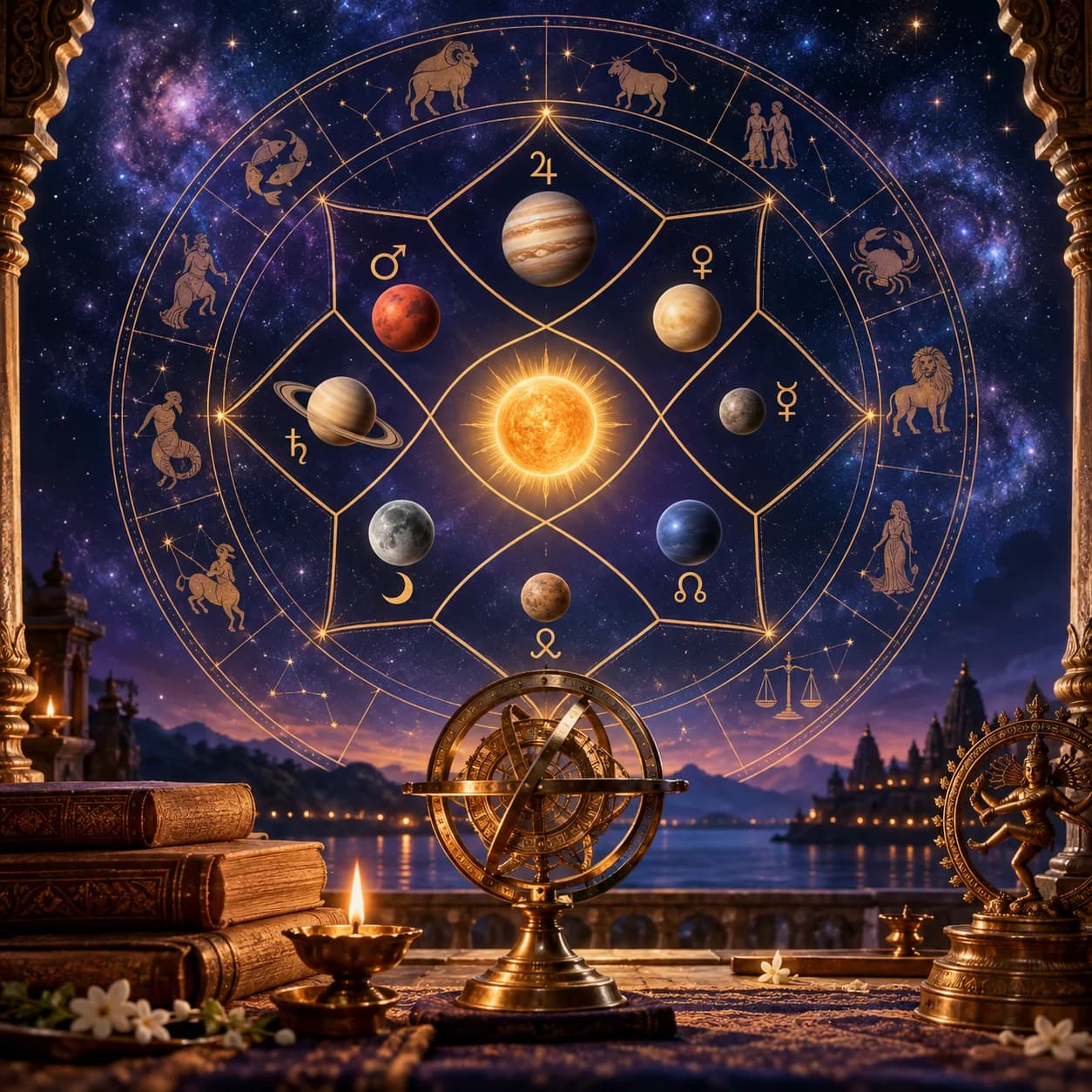
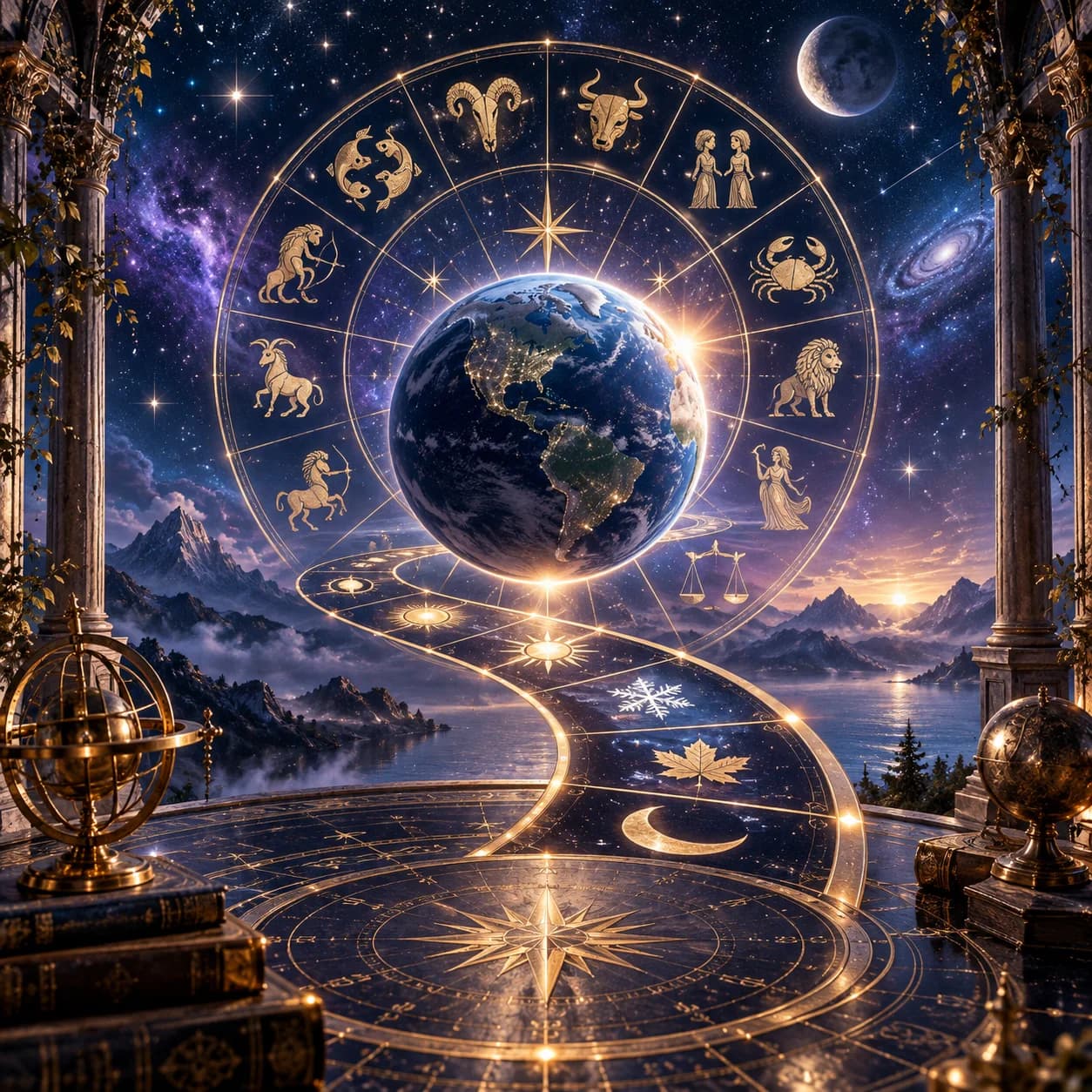
A yearly horoscope is a symbolic snapshot of the sky for a given year, interpreted in relation to a specific birth chart or location. Unlike a daily sun-sign forecast, which reduces astrology to twelve broad categories, a yearly horoscope is typically calculated for an individual or a place and covers a longer arc of time. It may highlight slow-moving planetary cycles, such as Jupiter's twelve-year orbit or Saturn's twenty-nine-year cycle, and their interaction with the natal chart. The result is not a list of events but a set of themes—periods that might emphasise growth, consolidation, relationship shifts, or career changes. In this sense, a yearly horoscope is more like a weather map than a script: it shows prevailing conditions, not the exact moment you will need an umbrella.
How a Yearly Horoscope Is Calculated
Calculation begins with astronomical data. Astrologers use ephemerides—tables of planetary positions—to determine where the Sun, Moon, and planets will be at specific times. For a personal yearly horoscope, they also need the exact birth date, time, and place to cast a natal chart. From there, they calculate transits: the current positions of planets relative to the natal chart. They may also use progressions, which advance the natal chart symbolically (often one day for each year of life), and solar returns, a chart cast for the moment the Sun returns to its natal position each year. These techniques are mathematical and repeatable. Two astrologers using the same birth data and the same ephemeris should arrive at the same planetary positions. The calculation is not the interpretation; it is the raw material.
Interpretation: Where Symbolism Enters
Interpretation is where astrology becomes an art of meaning-making rather than a science of measurement. Once the planetary positions are known, the astrologer assigns significance based on tradition: Jupiter might be linked to expansion, Saturn to limitation and discipline, Venus to relationships and values. These meanings are not derived from astronomy; they are cultural and historical. A yearly horoscope might say that Saturn transiting the tenth house could indicate a year of career responsibility, but that is a symbolic reading, not a causal claim. Different astrological schools—modern, traditional, Vedic—may interpret the same transit differently. The value of the interpretation lies in its ability to prompt reflection, not in its predictive accuracy. As one commentary notes, horoscopes are ultimately about pattern recognition and meaning-making, not fortune-telling in the sense of knowing your exact Tuesday.
The Distinction Between Calculation and Interpretation
Keeping calculation and interpretation separate is essential for clear thinking. Calculation deals with facts: the Moon will be in Pisces on a given date; Jupiter will oppose your natal Sun at a certain degree. These are verifiable astronomical events. Interpretation deals with symbols: what does Jupiter opposite the Sun mean for your year? That depends on the astrologer's framework, the client's circumstances, and the cultural context. A yearly horoscope that blurs the two can seem more authoritative than it is. A responsible astrological article should always distinguish between the astronomical data and the symbolic reading. This distinction also helps users of horoscopes avoid treating them as literal predictions. The map is not the territory; the symbol is not the event.
What a Yearly Horoscope Can and Cannot Do
A yearly horoscope can offer a structured way to reflect on the year ahead. It can highlight recurring themes, suggest periods of potential change, and provide a vocabulary for personal growth. Many people find that the symbolic language of astrology helps them articulate hopes and fears. However, a yearly horoscope cannot predict specific events with certainty. It cannot tell you whether you will get a promotion, meet a partner, or face a health crisis. Astrology is considered pseudoscientific by the scientific community because its claims are not falsifiable and its predictions do not consistently outperform chance. A yearly horoscope should never replace professional advice—medical, financial, legal, or psychological. It is a tool for contemplation, not a substitute for agency. You remain the author of your year.
Using a Yearly Horoscope Wisely
If you choose to engage with a yearly horoscope, approach it as you would a poem or a journal prompt. Read it with curiosity, not credulity. Notice which themes resonate and which do not. Ask yourself: does this symbol point to something I am already sensing? Does it offer a new perspective? Avoid treating it as a command or a guarantee. You might use it to set intentions, to mark seasonal shifts, or to start conversations. You might also decide it is not for you—and that is perfectly valid. The most grounded approach is to hold the horoscope lightly, as one of many lenses for self-reflection. It is not a diagnosis, a prophecy, or a professional recommendation. It is a story about time, and like all stories, its meaning depends on the reader.
Sources and further reading
The Times of India. "Yearly Horoscope 2026." https://timesofindia.indiatimes.com/astrology/horoscope/yearly GaneshaSpeaks. "Yearly Education Horoscope." https://www.ganeshaspeaks.com/horoscopes/yearly-education-and-knowledge-horoscope/ Quora. "To what extent can you rely on these yearly horoscope predictions online?" https://www.quora.com/To-what-extent-can-you-rely-on-these-yearly-horoscope-predictions-online Wikipedia. "Astrology." https://en.wikipedia.org/wiki/Astrology Moon Omens. "2026 Yearly Horoscope." https://www.moonomens.com/yearly-horoscope/ Study.com. "Astrology | Overview, History & Study." https://study.com/learn/lesson/video/astrology-overview-history.html