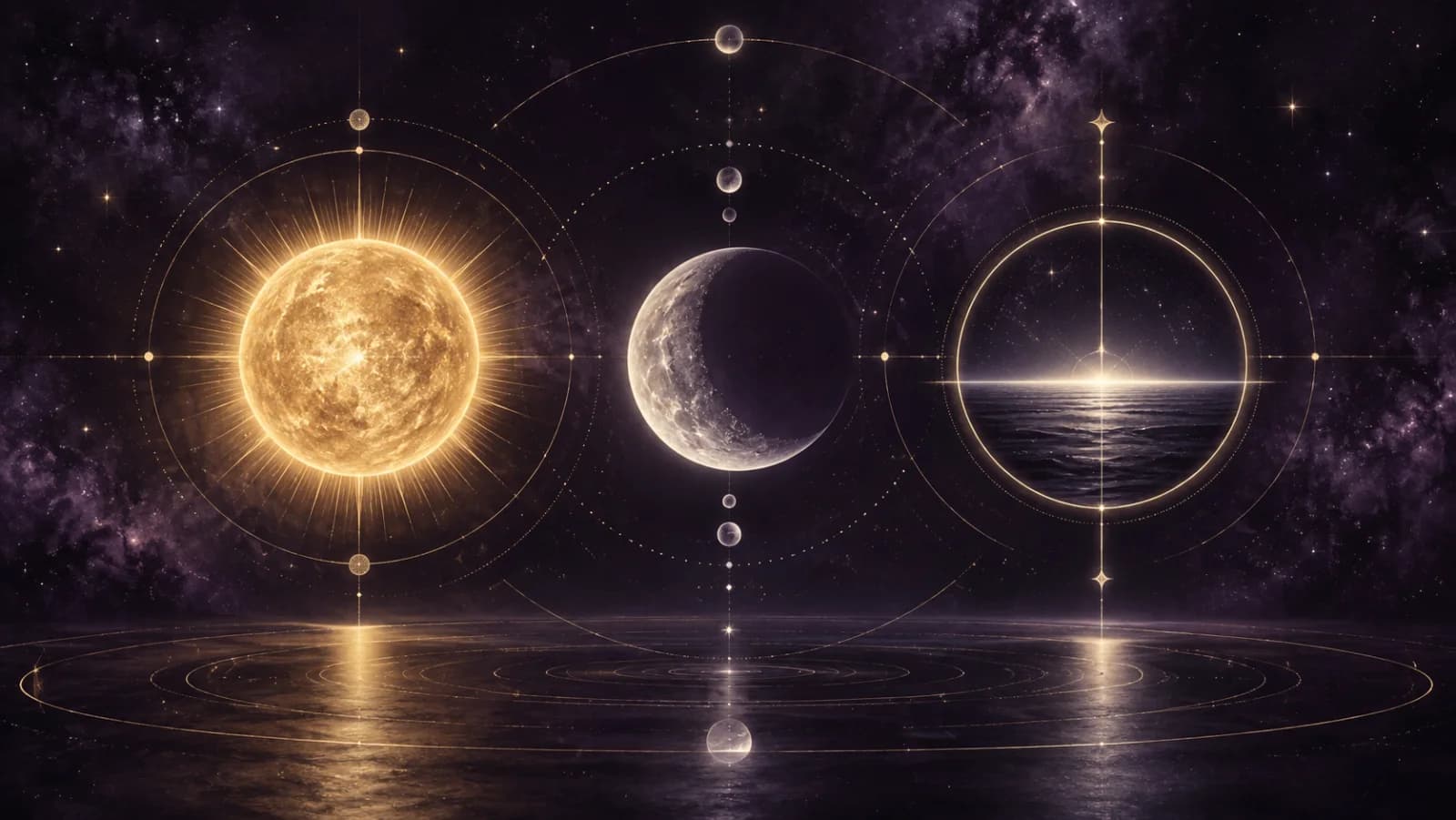
Three points, three questions
The Sun, Moon, and Ascendant are often compressed into a three-line personality test. A natal chart is more precise than that. Each point answers a different question, and each gains meaning from its sign, house, ruler, and aspects.
The Sun: purpose and authorship
The Sun describes the organizing center of the chart: the qualities through which a person develops purpose, vitality, and authorship of their life. Its sign describes style; its house shows where that solar work becomes especially visible. A Leo Sun in the second house, for example, cannot be interpreted responsibly from Leo alone—the second-house emphasis on value, resources, and self-worth changes the story.
The Moon: response and memory
The Moon describes embodied response: habit, memory, appetite, safety, and the way experience is absorbed before it is explained. Its phase and aspects matter. A Moon under pressure from Saturn is not simply the same Moon sign with a footnote; restraint, time, responsibility, or emotional economy becomes part of how that Moon operates.
The Ascendant: the local horizon
The Ascendant is neither a mask nor a superficial first impression. It is the eastern horizon at the birth moment and establishes the entire house structure. Its sign describes how life is approached, while its ruling planet becomes the chart ruler. The condition and location of that ruler often say more than a list of Ascendant traits.
Reading the three together
Read the three in sequence: the Ascendant shows the road into experience, the Moon shows how experience is metabolized, and the Sun shows what the life is learning to center. Agreement among them creates continuity. Tension among them does not mean a broken personality; it describes the work of integration.