What Kundli Matching Is
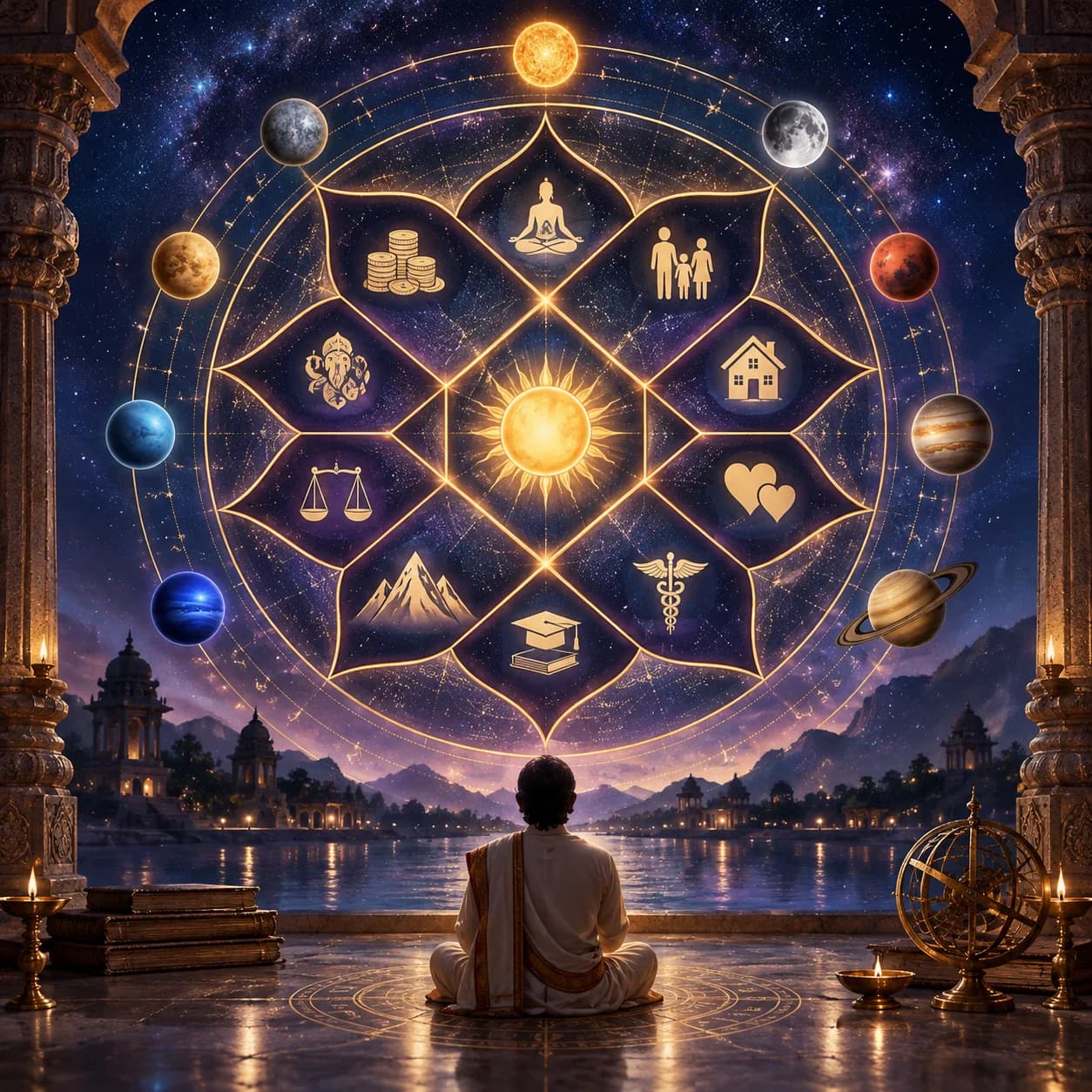
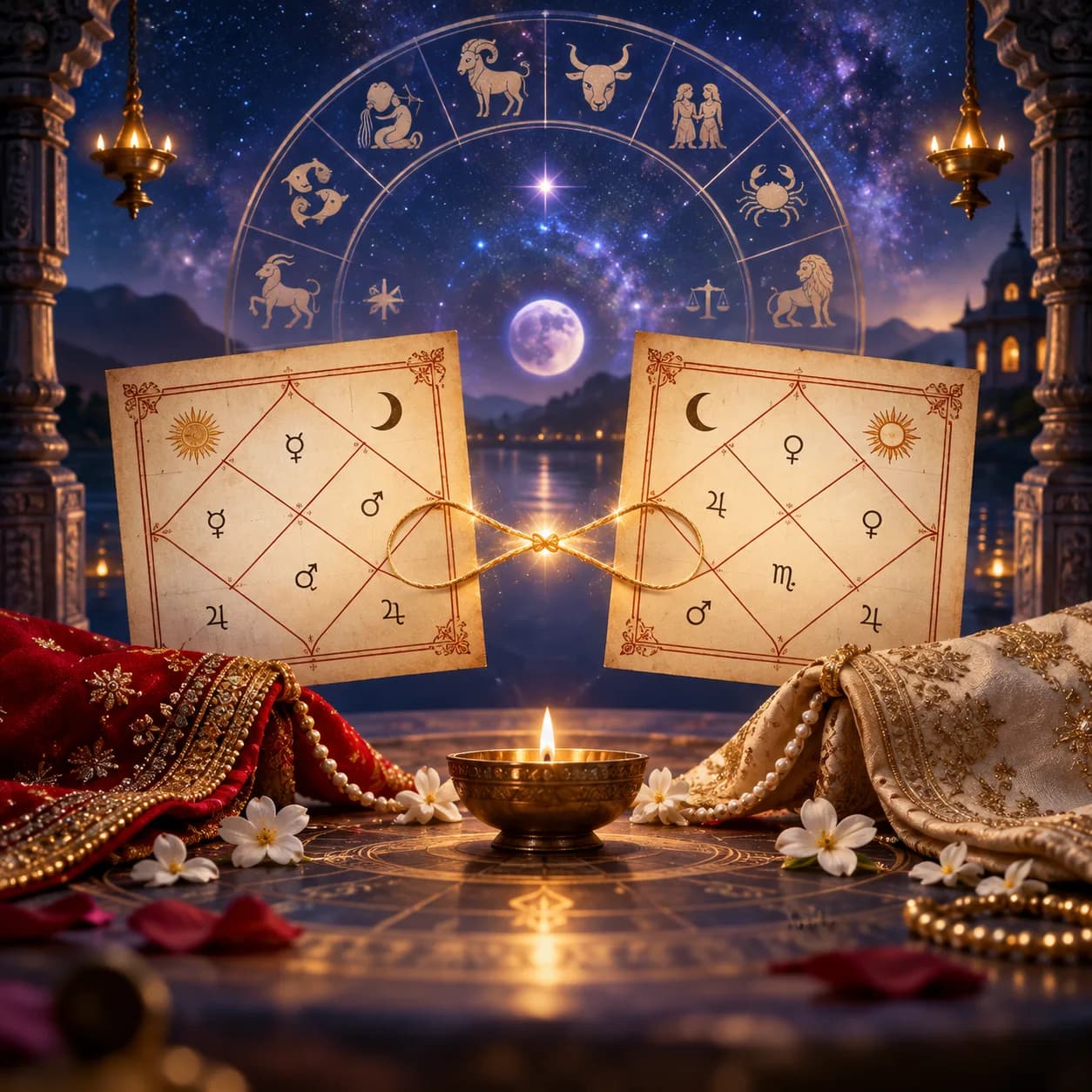
Kundli matching, also called kundali matching or horoscope matching, is a traditional practice within Vedic astrology in which the birth charts of two people are compared to assess their suitability for marriage. The practice is most closely associated with Hindu marriage customs, where families and individuals have historically consulted astrologers before finalizing a match. The underlying idea is that each person's chart reflects certain tendencies, and that comparing two charts can highlight areas of harmony or friction. It is important to frame this accurately: kundli matching is a cultural and astrological tradition, not a scientifically validated method of predicting relationship outcomes. Many people find meaning in it as part of family custom or personal belief, while others treat it as one input among many. Understanding what the practice claims to do, and what it cannot do, is the first step toward engaging with it thoughtfully.
The Calculation Stage: What the Charts Contain
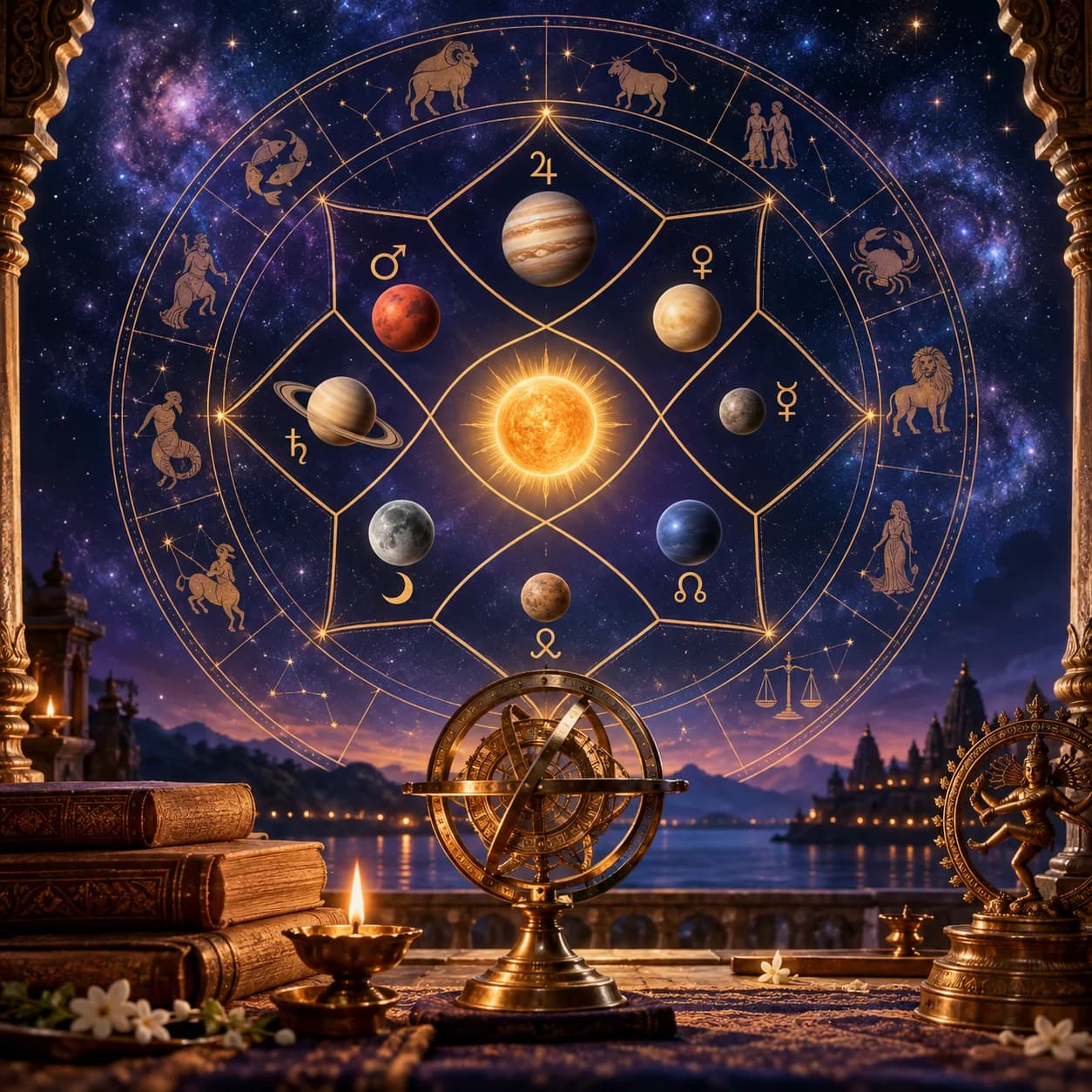
Before any interpretation happens, kundli matching begins with calculation. A Vedic birth chart is cast from a person's date, time, and place of birth, and it maps planetary positions against the zodiac and the twelve houses. For matching, the two charts are compared across a set of traditional factors, often described as the ashtakoota or eight-fold system. These factors include variables such as the moon signs of both individuals, the relationship between their lunar mansions (nakshatras), and other positional comparisons. Each factor is assigned a point value, and the points are summed to produce a total, commonly on a scale of 36. This stage is mechanical: given the same birth details and the same convention, the arithmetic should be reproducible. The calculation does not itself say whether a marriage will succeed; it only produces a structured comparison according to rules that astrologers have inherited and debated for centuries.
The Interpretation Stage: Where Judgment Enters
Interpretation is where kundli matching becomes far less mechanical. A total score is only a number; what it means depends on the framework being used and the judgment of the person reading it. Some popular discussions treat a threshold, such as 18 out of 36 points, as the dividing line between an acceptable and unacceptable match, but such thresholds are conventions rather than universal rules, and different schools of practice weigh the factors differently. Interpretation also involves considering specific configurations described as doshas, which are said to indicate challenging patterns, along with traditional remedies or mitigating factors. Crucially, the same chart data can be read in different ways by different practitioners. This is why it is useful to separate the calculation, which is rule-bound, from the interpretation, which involves human judgment, cultural assumptions, and often considerable discretion.
Common Claims and Their Limits
Popular sources make strong claims about kundli matching. Some describe it as a way to nullify bad effects after marriage or to determine whether a union is approved by astrology. Others present it as a centuries-old science. These claims deserve careful handling. The practice is centuries old, but age is not evidence of predictive accuracy, and describing astrology as a science overstates what the evidence supports. Controlled studies of astrological prediction have generally not found that birth charts reliably forecast relationship outcomes. At the same time, dismissing the practice entirely misses why it persists: it can serve as a structured occasion for families to discuss expectations, values, and concerns. A grounded approach treats kundli matching as a cultural and interpretive tradition, valuable to some for its meaning and ritual role, rather than as a reliable forecast of marital success or failure.
How to Engage With a Matching Report
If you encounter a kundli matching report, a few practical habits help. First, check the inputs: accurate birth times and places matter enormously in chart calculation, and small errors can shift results. Second, ask which system and which factors were used, since scoring conventions vary. Third, distinguish descriptive statements from predictions; a report that says two charts share a certain configuration is making a different kind of claim than one that says a marriage will fail. Fourth, treat any single score as one perspective, not a verdict. Finally, remember that relationship compatibility involves communication, shared values, conflict resolution, and consent, none of which a birth chart can measure. Astrological matching may be meaningful within a family's tradition, but major life decisions are best made with full information and genuine mutual agreement, not on the basis of a numerical total alone.
A Balanced Conclusion
Kundli matching sits at the intersection of astronomy-derived calculation, inherited interpretive rules, and living cultural practice. It is neither a guaranteed formula for a happy marriage nor something to mock. The most useful stance is informed and curious: understand how the charts are calculated, recognize where interpretation and convention shape the conclusions, and hold any predictions with appropriate uncertainty. For those who value the tradition, matching can be a meaningful part of marriage preparation. For those who do not, it is still worth understanding as a widespread cultural practice. In either case, the practice is best treated as a lens for reflection rather than a source of certainty about two people's future together.
Sources and further reading
AstroSage, "Horoscope Matching | Kundali Matching | Kundli Match for Marriage": https://www.astrosage.com/freechart/matchmaking.asp The Times of India, "Is Kundli Matching Necessary For Love Marriage": https://timesofindia.indiatimes.com/astrology/relationships-marriage/is-kundli-matching-necessary-for-love-marriage/articleshow/68205906.cms Medium (Samasyasamadhan), "The Science and Significance of Kundali Matching for Marriage": https://medium.com/@samasyasamadhan.in/decoding-the-mysteries-of-love-and-compatibility-the-science-and-significance-of-kundali-matching-59ec0479e285 Reddit r/Arrangedmarriage, "Explain Kundali Match?": https://www.reddit.com/r/Arrangedmarriage/comments/1e3ud6o/explain_kundali_match/ YouTube, "Marriage Compatibility Test According To Vedic Astrology": https://www.youtube.com/watch?v=LJyGV-cwuPg Quora, "What is the purpose of a kundli match?": https://www.quora.com/What-is-the-purpose-of-a-kundli-match-Does-it-tell-you-what-job-you-should-do-or-not-do