Introduction: The Appeal of the Free Birth Chart Calculator
In recent years, free birth chart calculators have become widely accessible online. These tools invite anyone with a birth date, time, and place to generate a personal astrology chart—often displayed as a circular wheel with symbols for planets, zodiac signs, and houses. The appeal is understandable: a birth chart offers a structured way to reflect on personality, timing, and life themes. However, it is important to distinguish between the calculator itself and the interpretation that may follow. A calculator performs astronomical and mathematical computations; it does not inherently provide meaning. This article explores what free birth chart calculators actually do, how they differ from readings, and how to use them as educational starting points rather than definitive pronouncements.
What a Birth Chart Represents
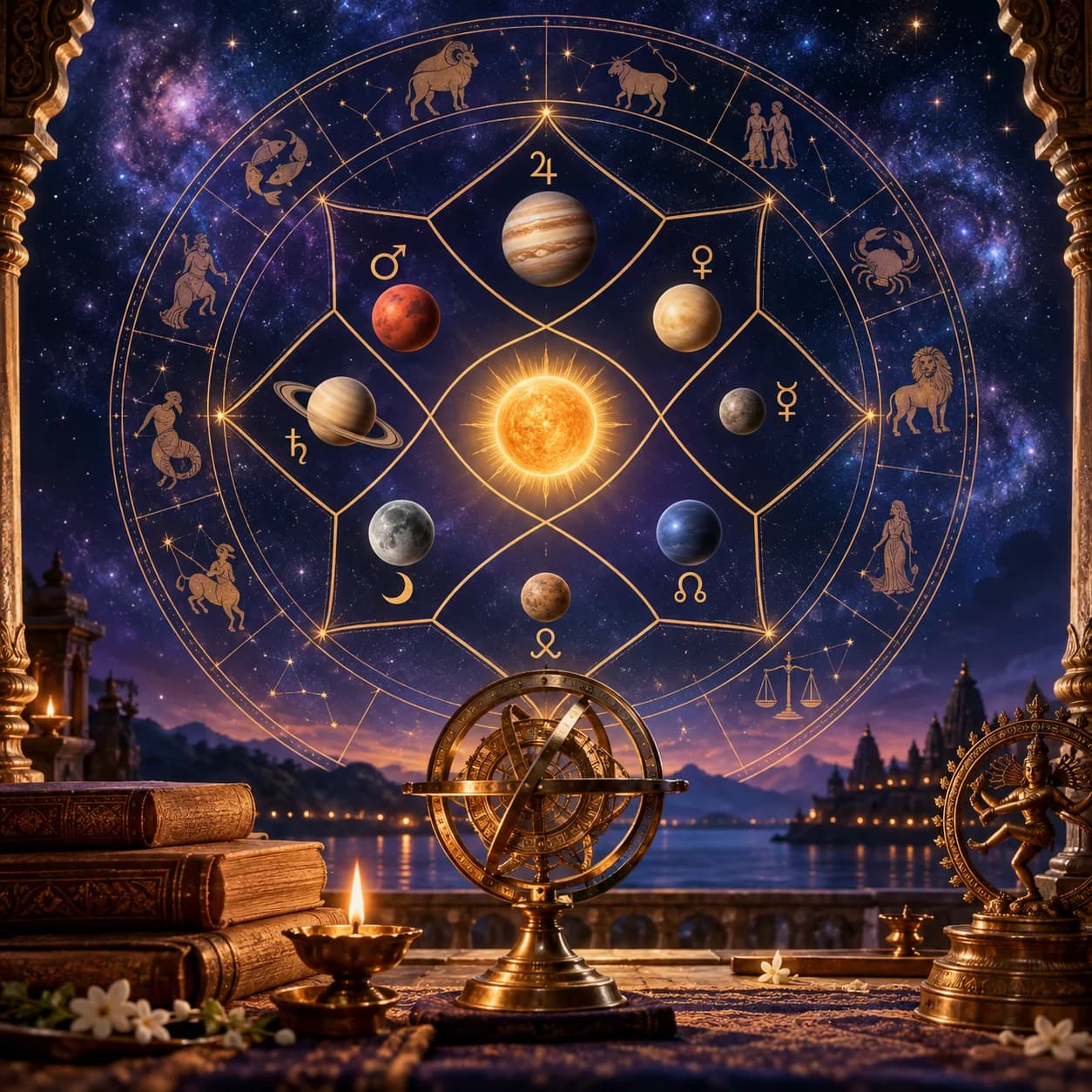
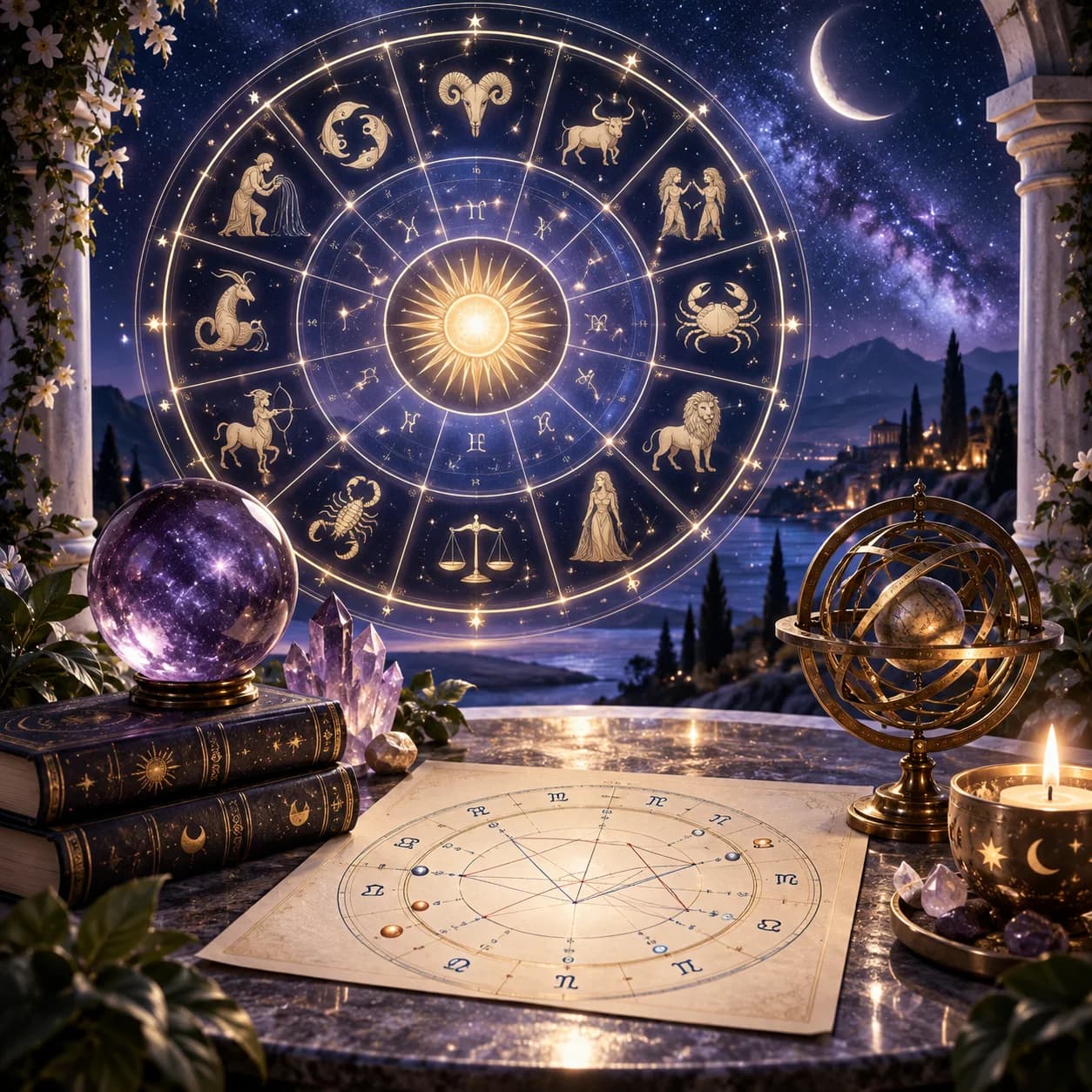
A birth chart, also called a natal chart, is a snapshot of the sky at a specific moment and location. In astrology, the positions of the Sun, Moon, planets, and other celestial points are mapped onto a circle divided into twelve zodiac signs and twelve houses. The Ascendant, or rising sign, marks the eastern horizon at the birth time, while the Midheaven indicates the highest point of the ecliptic. These placements are calculated using ephemeris data—tables of planetary positions over time—and geographic coordinates. The chart is not a physical object but a symbolic diagram. It organizes astronomical data into a format that astrologers interpret according to established traditions. A free calculator automates the data-gathering and plotting, making the chart accessible without manual ephemeris work.
How Free Calculators Work: Inputs and Calculations
Most free birth chart calculators require three core inputs: date of birth, time of birth, and place of birth. The date determines the positions of the Sun and outer planets, which move slowly. The time is crucial for the Ascendant, Midheaven, and house cusps, as the sky rotates approximately one degree every four minutes. The place provides latitude and longitude, which affect house divisions and the local horizon. After entering these details, the calculator uses astronomical algorithms to compute planetary longitudes, declinations, and aspects. Some tools also offer optional settings, such as the house system. For example, the Placidus method is commonly used and is noted as popular worldwide, though other systems like Whole Sign or Equal House exist. The output typically includes a chart wheel, a list of placements with degrees and signs, and sometimes a table of aspects. These are calculated facts, not interpretations.
Calculation Versus Interpretation: A Critical Distinction
A free birth chart calculator produces calculated data: planet in sign, planet in house, aspect angles, and so on. Interpretation, by contrast, assigns meaning to those placements. For instance, a calculator may show that Mars is in Aries in the tenth house. An interpretation might suggest assertiveness in career matters, but that meaning comes from astrological tradition, not from the calculation itself. Many free tools bundle both: they generate the chart and then provide automated text that reads like a horoscope. It is essential to recognize that automated interpretations are generic and not tailored to the whole chart. They can be useful for learning keywords, but they should not be treated as personal advice or certain predictions. A chart is a map of possibilities, not a fixed script.
Common Features and Variations Among Free Tools
Free birth chart calculators vary in features and presentation. Some, like AstroLibrary.org, offer a natal placements list alongside interpretations. Others, such as Astro.cafeastrology.com, provide reports for birth, relationships, and even previews. ASTROLABE’s free program uses the Placidus house system, while Astrocarto.net displays the chart wheel, Ascendant, house system, planet positions, zodiac signs, degrees, and house placements, and may include an AI reading. CHANI describes the birth chart as a blueprint of purpose and potential. Michele Knight’s site emphasizes deeper self-understanding. Despite these differences, the core calculation remains similar. Users should note that some sites may require an account or offer paid upgrades. The accuracy of any calculator depends on the precision of the birth time and the underlying ephemeris. When birth time is unknown, some tools allow a solar chart or noon default, but house placements become unreliable.
Using a Free Calculator as an Educational Tool
For learners, a free birth chart calculator can be a valuable educational aid. It allows you to see how astrological symbols correspond to astronomical positions. You can compare charts of public figures (with known birth data) or explore how changing the birth time shifts the Ascendant and houses. This hands-on approach builds familiarity with the zodiac, planets, and aspects. However, it is wise to cross-check calculations across multiple calculators to ensure consistency. Discrepancies may arise from different house systems, ephemeris versions, or time zone handling. Treat the calculator as a starting point: note the placements, then consult reputable astrology texts or courses to understand their meanings. Avoid relying solely on automated interpretations, which may oversimplify or misrepresent complex chart dynamics.
Ethical and Practical Considerations
Free birth chart calculators raise ethical and practical questions. Privacy is a concern: entering birth data on a website shares personal information. Users should review privacy policies and consider whether the tool stores data. Additionally, automated interpretations can foster a sense of certainty that astrology does not warrant. Astrology is a symbolic language, not a predictive science. It should not replace professional advice in medical, legal, or financial matters. A calculator cannot diagnose health issues or guarantee outcomes. It is also important to avoid treating a chart as a fixed identity. Astrologers often emphasize free will and personal growth. A chart may highlight tendencies, but how you express them is up to you. Finally, be wary of tools that promise to reveal your “destiny” or “purpose” with absolute certainty; such claims overstep the limits of astrological interpretation.
Sources and further reading
AstroLibrary.org. “Free Birth Chart Calculator and Reading.” https://astrolibrary.org/free-birth-chart/ • Cafe Astrology. “Free Astrology Birth Chart Report.” https://astro.cafeastrology.com/natal.php • ASTROLABE. “Free Natal Chart / Horoscope.” https://alabe.com/freechart/default.asp • Michele Knight. “Your free astrology birth chart with interpretation report.” https://micheleknight.com/free-readings/free-astrology-birth-chart/ • Astrocarto.net. “Free Birth Chart Calculator with Houses, Ascendant & AI Reading.” https://astrocarto.net/birth-chart-calculator • CHANI. “Free Astrology Birth Chart.” https://www.chani.com/chart