Relationships written in geometry
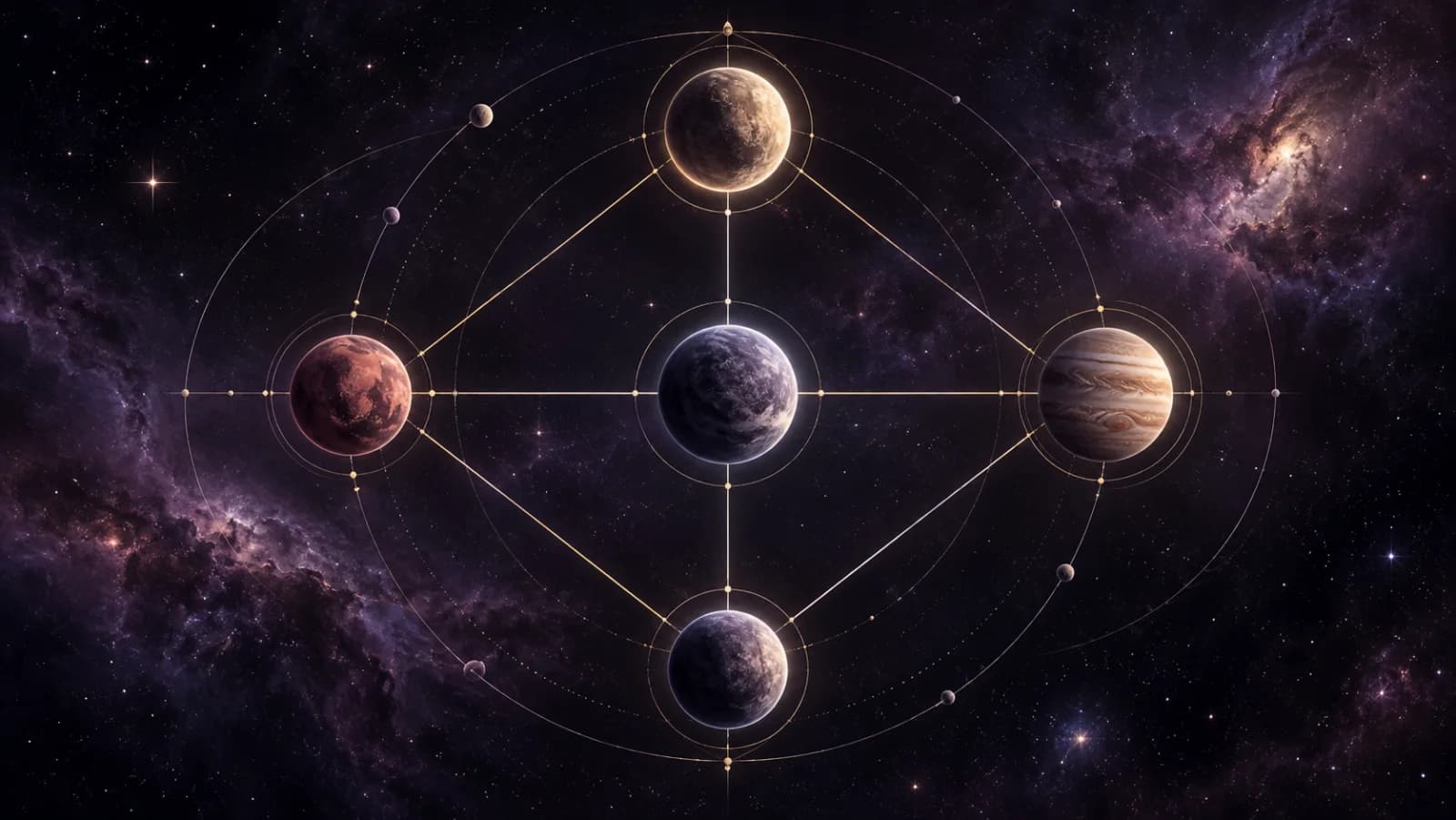
An aspect is an angular relationship between two chart points. It tells us that two planetary functions are connected. The planets describe what is relating; the aspect describes the form of the relationship; signs and houses show how and where it is expressed.
The five major aspects
A conjunction brings planets into the same area and intensifies their combination. A sextile offers workable opportunity. A square creates pressure that demands action or adjustment. A trine allows energy to travel with relative ease. An opposition places two functions across an axis, asking for awareness, negotiation, and balance.
Ease is not always good
No aspect is automatically good or bad. A trine can describe a talent so effortless that it remains undeveloped. A square can produce mastery because it refuses to be ignored. Planetary condition, reception, house placement, and the rest of the chart determine how constructive or difficult the connection may become.
Orb, applying, and separating
Orb measures distance from exactness. Tighter aspects usually speak more loudly, but acceptable orbs vary by planet, aspect, and tradition. Applying aspects are moving toward exactness; separating aspects are moving away. That distinction is especially important in event and horary work.
Turn geometry into language
Interpret aspects as sentences rather than keywords. Name both planets, describe the relationship, locate it in the houses, and only then translate it into ordinary language. Geometry comes first; meaning follows.